Pufferfish Hybridisation

Updated: Apr 24
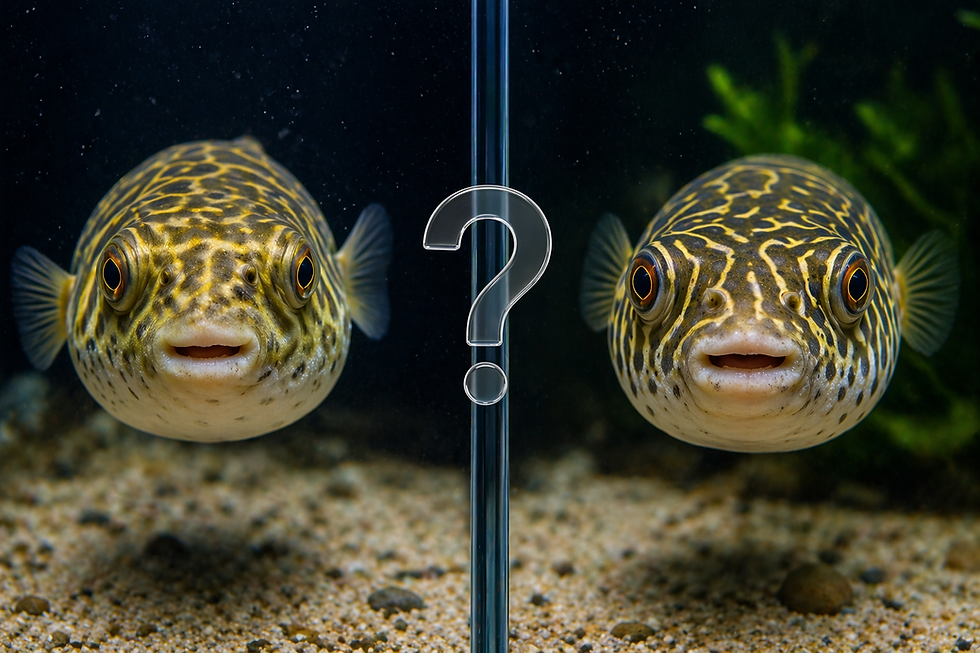
Every so often, hybrid pufferfish return to conversation. A photograph circulates, a fish is labelled as something unusual, or a claim is made that two species have been crossed.
These claims tend to spread quickly, and with repetition, they begin to feel plausible, particularly where visual differences are subtle and classification is not immediately clear.
Within the family Tetraodontidae, however, hybridisation is not a general feature, and in most cases it is not a realistic possibility. Where hybridisation does occur in fish, it is typically restricted to closely related species operating within a narrow set of biological and environmental conditions. Pufferfish, as a group, rarely meet those conditions. They span deeply separated evolutionary lineages, exhibit distinct reproductive strategies, and often occupy environments that do not overlap. In many cases, the basic requirements for hybridisation are absent from the outset.
It is also notable that the most confident claims seldom emerge from scientific work. They tend instead to arise in contexts where rarity carries value, and where visual interpretation is allowed to stand in place of evidence.
This article examines how hybridisation functions in biological terms, and why those constraints place clear and consistent limits on what is possible within pufferfish.
What Is a Hybrid?
A hybrid is an organism produced through the reproduction of two genetically distinct parents. These parents may belong to different species, subspecies, or separate populations, but in each case, they represent separate genetic lineages.
What defines a hybrid is mixed inheritance. It carries genetic material from both sides and may display a combination of traits drawn from each parent.
That definition is straightforward, but what follows is not.
Hybridisation Is Constrained, Not Creative

Hybridisation is often framed as a way of creating something new, but in biological terms, it does not expand possibilities; it operates within limits.
Human involvement can increase the opportunity for hybridisation, but it cannot extend the underlying window of compatibility.
In agriculture, plants have been selectively crossed for thousands of years to improve yield, resilience, flavour, and storage life. Many staple crops are the result of deliberate hybridisation, shaped over generations.
In animals, similar principles apply. The mule, produced by crossing a horse with a donkey, combines the strength and size of the horse with the endurance and sure-footedness of the donkey. Despite these advantages, it also illustrates the limits of hybridisation. Horses have 64 chromosomes, while donkeys have 62. The mule inherits 63, an uneven number that prevents proper pairing during meiosis, and as a result is almost always sterile.
Even highly visible hybrids, such as crosses between lions and tigers, depend on removing natural barriers such as geographic separation. In the wild, these species do not meet. In captivity, they can be brought together, but the same constraints remain. Developmental issues and reduced fertility are common outcomes.
In aquaculture, hybridisation is used within compatible groups to improve growth or production efficiency. Crosses such as Redtail catfish with Tiger shovelnose catfish succeed because the underlying genetic systems remain aligned. Where they do not, development fails regardless of intervention.
Hybridisation is therefore not an open-ended process. It follows a consistent biological pattern and occurs only within a narrow window of compatibility.
The Biological Filters: Why Most Hybrids Fail
Hybridisation is observed in nature and, in some cases, contributes to evolutionary change. By combining distinct gene pools, it can introduce variation more rapidly than mutation alone, occasionally supporting adaptation under shifting environmental conditions.

The presence of Neanderthal DNA in modern humans illustrates this clearly. As modern humans dispersed out of Africa, they encountered and interbred with closely related groups such as Neanderthals and Denisovans.
Hybridisation, however, is not open-ended. It follows a consistent biological pattern and occurs only within a narrow window of compatibility.
When the reproductive biology and genetic systems of two species remain sufficiently aligned, hybridisation can occur with relative ease. Humans and Neanderthals were closely related in evolutionary terms, whereas more distant relatives such as the chimpanzee remain incompatible.
The same principle applies across the entire animal kingdom. This window of compatibility is governed by a series of biological filters, namely pre and post-zygotic barriers.
Pre-zygotic Barriers
Pre-zygotic barriers act first, preventing mating or fertilisation before a zygote can form.
Many species that would otherwise be compatible are separated geographically, and in these cases, the environment itself acts as the pre-zygotic barrier, preventing any possibility of contact.
The ability to recognise a suitable mate is often highly specific, shaped by visual signals, chemical cues, or behavioural patterns that must align closely for mating to occur, and where these signals do not correspond, individuals simply fail to identify one another as potential partners. Timing introduces another level of separation, as reproductive cycles must overlap for mating to be possible, yet even closely related species may reproduce at different points within a season or across the year, ensuring that encounters do not lead to fertilisation.
Physical compatibility must also be maintained, as reproductive structures and processes need to align closely enough for successful mating, and even small differences can prevent the effective transfer of gametes. Beyond this, fertilisation itself depends on precise biochemical interactions between sperm and egg, meaning that even where mating has taken place or gametes have been released in proximity, incompatibility at the cellular level can prevent a zygote from forming.
Where these barriers are incomplete or artificially removed, fertilisation may occur, and at this point, post-zygotic mechanisms determine the outcome.
Post-zygotic Barriers
These operate after a zygote has formed and act across successive stages of development, from the earliest cell divisions through to reproductive maturity, with effects that are not uniform but follow a broadly consistent pattern. In many cases, incompatibilities emerge almost immediately when the genetic instructions inherited from each parent fail to coordinate effectively, disrupting early development so that the embryo does not progress beyond its initial stages. This represents the most complete form of post-zygotic isolation, where hybridisation is technically achieved, but no organism is produced.
Where development does continue further, the effects of incompatibility may become apparent later, often expressed as structural abnormalities or failures in essential biological systems. Individuals produced under these conditions may reach advanced stages of development, or even birth or hatching, but remain non-viable and incapable of sustained survival.
In a smaller number of cases, hybrids reach full maturity and appear outwardly functional, yet remain reproductively incapable. This outcome reflects deeper genetic mismatches that do not prevent development itself, but disrupt the formation of viable gametes. It is within this category that patterns such as Haldane’s rule are observed, where one sex, typically the heterogametic sex, is more likely to be absent, rare, or sterile, as observed in the mule.
Only in a limited subset of pairings do hybrids remain both viable and fertile, and even then, this typically occurs between species that remain very closely aligned genetically. The emergence of stable hybrid lineages requires not only viability and fertility, but the repeated success of hybrid reproduction across generations, a condition that is rarely met outside narrow evolutionary boundaries.
When Barriers Are Weak or Break Down in Nature

Where these constraints remain weak, hybridisation becomes observable in natural systems. Among the clearest examples are cichlids in the East African Rift Lakes, particularly Lake Victoria and Lake Malawi. Many of these species diverged so recently, in some cases within the last 15,000 years, that strong reproductive barriers have yet to fully form.
When environmental conditions shift, previously distinct lineages can interbreed. This process allows genetic traits to move between populations, and in some cases stabilise into new lineages over time.
Similar dynamics are observed in Central American crater lakes, where hybridisation has contributed to the formation of distinct ecological specialists.

A widely recognised example involves the interaction between the polar bear and the brown bear. As environmental conditions change, these species are coming into contact more frequently, increasing opportunities for hybridisation that were historically limited. Their evolutionary divergence is recent enough that few pre-zygotic barriers prevent mating when encounters occur, and their genomes remain compatible enough to produce viable offspring.
This reflects the same principle seen in humans and Neanderthals. The closer two species remain in evolutionary terms, the more likely their reproductive systems and genetic structures are to align. As that distance increases, the probability of successful hybridisation declines sharply, first through the accumulation of pre-zygotic barriers, and then through deeper post-zygotic incompatibilities.
Within the bear family itself, this gradient becomes clear. While polar bears and brown bears retain sufficient compatibility to produce viable hybrids, more distantly related species, such as the spectacled bear, diverged far earlier and belong to a separate lineage, making successful hybridisation under natural conditions unlikely.
The resulting hybrids, often referred to as “pizzly” or “grolar” bears, represent a functional overlap between two ecological strategies. The polar bear is highly specialised for life on sea ice, relying heavily on seal blubber, while the brown bear is far more flexible, capable of exploiting a wide range of terrestrial food sources. Where hybrids are fertile, this combination of traits can be passed forward, creating the potential, in principle, for lineages capable of functioning in environments that neither parent species is optimally adapted to alone.
Hybridisation in Pufferfish
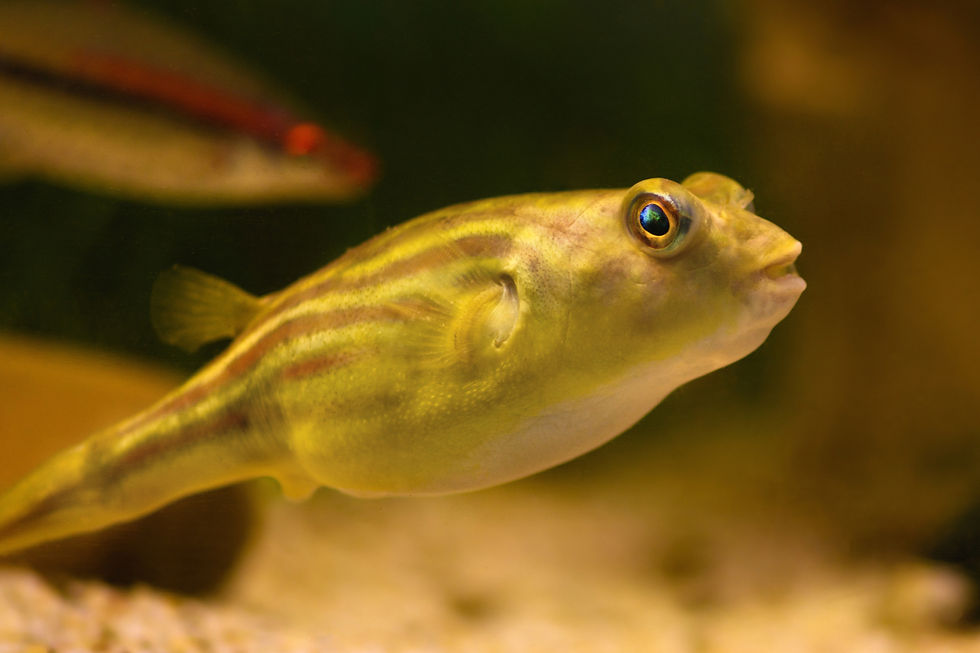
Pufferfish are often assumed to be broadly compatible because of superficial similarity, yet in practice they demonstrate the opposite, as the apparent uniformity of form conceals substantial genetic separation across the family.
Within the pufferfish family, hybridisation is not a general feature, and where it does occur, it is confined to narrow relationships within specific lineages rather than extending broadly across taxa.
Confirmed cases are largely restricted to the genus Takifugu, where closely related species can hybridise under particular conditions, typically where evolutionary distance remains small and where geographic and reproductive barriers are incomplete.
Under human control, some of these constraints can be reduced, but they cannot be removed, and even in aquaculture, the production of hybrids such as crosses between Takifugu rubripes and Takifugu flavidus depends on the fact that the parent species already sit within a narrow window of compatibility.
These examples do not demonstrate that pufferfish hybridise easily, but instead illustrate how restricted the conditions must be for hybridisation to occur at all.
Hybridisation Claims in African Freshwater Tetraodon

Claims of hybridisation involving large African pufferfish, particularly Tetraodon mbu, Tetraodon lineatus, and Tetraodon pustulatus, lack credible supporting evidence and tend to rely on superficial interpretation rather than demonstrable biological compatibility.
Among proposed pairings, T. lineatus × T. pustulatus is sometimes suggested on the basis of outward similarity. This reflects a common misunderstanding. Hybridisation does not follow visual resemblance, but genetic compatibility, and that compatibility operates within narrow limits even between species that appear closely related.
A useful comparison can be drawn from rodents. The brown rat, Rattus norvegicus, and the black rat, Rattus rattus, share a genus and overlap geographically, yet there are no confirmed viable hybrids despite extensive opportunity. The barrier is not ecological, but genetic. Differences in chromosomal structure and developmental alignment prevent successful reproduction even where contact frequently occurs.
The same principle applies here. Although T. lineatus and T. pustulatus appear broadly similar, they are geographically isolated and do not represent a recently diverged, hybrid-prone grouping. There are no controlled or genetically verified cases of successful hybridisation between them, either in natural systems or under artificial conditions, and no evidential basis to suggest that their underlying biology is sufficiently aligned to support it.
Claims involving T. mbu are less plausible again. Differences in size, ecological niche, and reproductive biology introduce additional layers of separation, each of which corresponds to known constraints on hybrid viability. These are not superficial distinctions, and there is no evidence that they can be overcome.
In the absence of controlled breeding records or genetic confirmation, intermediate appearance cannot be taken as evidence of hybrid origin. In most cases, such observations are more convincingly explained by natural variation or misidentification.
Despite this, such fish are occasionally presented within the ornamental trade as hybrids and assigned elevated value on that basis. In these cases, visual difference is treated as evidence of genetic origin, and uncertainty is reframed as rarity. In the absence of verifiable data, this does not reflect the biological constraints outlined above, but it does shape perception, particularly where buyers are not equipped to assess the claim independently.
Responsibility and Market Behaviour
Once the biological constraints are understood, the question is no longer whether these hybrids are plausible, but why they continue to be presented as such.
Retailers who choose to market alleged hybrid pufferfish are not simply responding to demand. They are shaping it, reinforcing the idea that visual difference implies genetic novelty, and assigning value to animals whose origins are unverified and whose long-term viability is uncertain.
Where claims cannot be substantiated, and outcomes cannot be controlled, presenting such fish as desirable does not expand the boundaries of the hobby. It lowers the standard by which animals are assessed.
Welfare and Risks in Hybrid Ornamental Fish
Discussions around hybrid fish often conflate two separate questions, namely whether a hybrid can be produced and whether it should be, and while the first may occasionally be answered in the affirmative, it does not, on its own, justify the second.
This distinction becomes particularly important in ornamental fish, where visual novelty can drive demand and where selection may shift away from function toward appearance, with traits that attract attention being prioritised even when they compromise how the animal feeds, swims, or maintains balance, gradually producing forms that no longer align cleanly with their underlying biology.

The Blood parrot cichlid illustrates this clearly with the rounded body and distinctive mouth that make it immediately recognisable, but those same features can limit feeding efficiency and disrupt normal swimming. These are not isolated defects in a small number of individuals but structural consequences of how the fish has been bred.
The Flowerhorn cichlid presents a more variable case, with some lines remaining robust while others are selected for exaggerated traits such as shortened bodies or pronounced cranial growth, and where these traits begin to interfere with movement, balance, or feeding, the issue moves beyond aesthetic preference and becomes one of biological function.
In natural systems, traits that reduce efficiency are typically removed over time through selection pressures, whereas in captivity, those constraints are relaxed, allowing forms that would not be maintained in the wild to persist, with the result that an animal may survive under constant constraint without those conditions being acceptable.
Beyond external form, hybridisation can also disrupt internal biological systems that rely on stable coordination between host and environment. In fish, the gut microbiome functions as part of an integrated biological network, supporting digestion, immune defence, and metabolic regulation. Where hybridisation occurs between species with differing diets or physiological profiles, that balance can be disturbed. Evidence from other fish models suggests that such disruption may lead to impaired nutrient processing, increased susceptibility to disease, and altered metabolic function. While specific data for African Tetraodon hybrids is not available, the underlying mechanism is well established, and the risk follows directly from it.
In pufferfish, the consequences of hybridisation outside a narrow window of compatibility are likely to be more severe, as their dentition, body plan, and internal organisation depend on precise developmental coordination, and disruption in these systems directly affects feeding, movement, and long-term survival.
Behaviour introduces an additional layer of risk, as these species are already large, often territorial, and in some cases highly aggressive, and a hybrid may combine rather than moderate these traits, producing individuals that are highly unsocial, unpredictable, and difficult even for experienced keepers to manage safely.
There is also no clear objective to justify the attempt, as these species are not bred for production and their existing diversity already satisfies ornamental demand, leaving novelty as the primary driver.
Where outcomes are uncertain, and the risk of compromised function is high, novelty becomes a weak justification, especially when the cost is ultimately carried by the animal itself.
References
Hybridisation Theory and Speciation
Abbott, R., Albach, D., Ansell, S., Arntzen, J.W., Baird, S.J.E., Bierne, N., Boughman, J.W., Brelsford, A., Buerkle, C.A., Buggs, R., Butlin, R.K., Dieckmann, U., Eroukhmanoff, F., Grill, A., Cahan, S.H., Hermansen, J.S., Hewitt, G., Hudson, A.G., Jiggins, C., Jones, J., Keller, B., Marczewski, T., Mallet, J., Martinez-Rodriguez, P., Moest, M., Mullen, S., Nichols, R., Nolte, A.W., Parisod, C., Pfennig, K., Rice, A.M., Ritchie, M.G., Seifert, B., Smadja, C.M., Stelkens, R., Szymura, J.M., Väinölä, R., Wolf, J.B.W. and Zinner, D. (2013). Hybridization and speciation. Journal of Evolutionary Biology, 26(2), 229–246. (Comprehensive modern synthesis of hybridisation as a constrained evolutionary process.)
Coyne, J.A. & Orr, H.A. (2004). Speciation. Sunderland, MA: Sinauer Associates. (Foundational framework for prezygotic and postzygotic reproductive isolation.)
Mallet, J. (2005). Hybridisation as an invasion of the genome. Trends in Ecology & Evolution, 20(5), 229–237. (Explains how hybridisation operates within genomic and evolutionary limits.)
Presgraves, D.C. (2010). The molecular evolutionary basis of species formation. Nature Reviews Genetics, 11(3), 175–180. (Details genetic incompatibilities and mechanisms underlying hybrid failure.)
Reproductive Barriers and Hybrid Dysfunction
Dobzhansky, T. (1937). Genetics and the Origin of Species. New York: Columbia University Press. (Original formulation of genetic incompatibility in speciation.)
Muller, H.J. (1942). Isolating mechanisms, evolution and temperature. Biological Symposia, 6, 71–125. (Establishes the Dobzhansky–Muller model of hybrid incompatibility.)
Orr, H.A. (1993). Haldane’s rule has multiple genetic causes. Nature, 361, 532–533. (Explains asymmetrical sterility and inviability in hybrids.)
Schilthuizen, M., Giesbers, M.C.W.G. & Beukeboom, L.W. (2011). Haldane’s rule in the 21st century. Heredity, 107(2), 95–102. (Modern synthesis of hybrid dysfunction patterns.)
Hybridisation in Fish and Adaptive Radiation
Seehausen, O. (2004). Hybridization and adaptive radiation. Trends in Ecology & Evolution, 19(4), 198–207.(Explains how hybridisation contributes to diversification in fish systems.)
Meier, J.I., Marques, D.A., Mwaiko, S., Wagner, C.E., Excoffier, L. & Seehausen, O. (2017). Ancient hybridization fuels rapid cichlid fish adaptive radiations. Nature Communications, 8, 14363. (Empirical evidence of hybridisation driving rapid speciation in cichlids.)
Seehausen, O., Van Alphen, J.J.M. & Witte, F. (1997). Cichlid fish diversity threatened by eutrophication, which curbs sexual selection. Science, 277(5333), 1808–1811. (Links environmental change to breakdown of reproductive isolation.)
Environmental Change and Hybridisation
Cahill, J.A., Green, R.E., Fulton, T.L., Stiller, M., Jay, F., Ovsyanikov, N., Salamzade, R., St John, J., Stirling, I., Slatkin, M. & Shapiro, B. (2015). Genomic evidence for island population conversion resolves conflicting theories of polar bear evolution. PLoS Genetics, 11(3), e1005205.(Genomic evidence of gene flow between polar and brown bears under changing environmental conditions.)
Hybridisation in Aquaculture
Bartley, D.M., Rana, K. & Immink, A.J. (2001). The use of interspecific hybrids in aquaculture and fisheries. Reviews in Fish Biology and Fisheries, 10(3), 325–337. (Overview of intentional hybridisation in aquaculture and its biological constraints.)
General Hybridisation Context
Arnold, M.L. (1997). Natural Hybridization and Evolution. Oxford: Oxford University Press.(Broad treatment of hybridisation across taxa, including stability and evolutionary outcomes.)


Comments