The Beauty of Blackwater Aquariums

Updated: Feb 4

I have spent a good portion of my life in front of fish tanks so far, and I don't think that's going to change any time soon. My hobby has never been static. Instead, it has always been moving, and it has always given me different rewards at different times in my life. As a child, my aquariums were places where my imagination could run freely after school. Now, they are a place of respite after work. Somewhere deadlines don't loom, and calmness is the default.
Seven-year-old me would reimagine the tinfoil barbs in the six-foot aquarium, which stood proudly in my bedroom, as mythical giants as they swam past the resin sculpture depicting a sunken nineteenth-century Destroyer. I could picture the panic spreading across the deck as the crew leaned over the railings and saw monsters - two-thirds the length of the ship - punching holes through the hull. Entire scenes played out in my head, and the aquariums were a stage on which those stories unfolded.

As I got older, fishkeeping slowly became less about how well the tanks served my imagination and more about how they served the fish that lived in them. Colourful gravel gave way to sand, soil, and leaf litter. Ornaments of shipwrecks and lost planes were replaced by wood, rock, roots, and other natural structures. My manicured planted tanks were an important step along that path, but it was through naturalistic aquariums that the hobby really began to feel the most complete.
Watching the inhabitants interact with their environment and display natural behaviours is, for me, the greatest reward the hobby has ever offered. That shift in focus is what ultimately led me to one of my latest projects, the Blackwater, where the environment is tuned to make the fish feel instinctively at home.
Although this particular aquarium does not house pufferfish, much of what is discussed here applies equally to species that originate from blackwater environments. Some freshwater puffers come from similarly soft, acidic, tannin-rich systems, even if the conditions they experience are not quite as extreme.
The Project

I had kept chocolate gouramis (Sphaerichthys osphromenoides) before, along with several closely related species, and they had always left a lasting impression on me. These fish are often described as 'specialist', not because they are more delicate or more deserving of care than others, but because they are less adaptable than many of the fish we are used to seeing. They respond clearly when their surroundings are right, and just as clearly when they are not.
Although they weren't a new species to me, I had never felt I had truly given them an aquarium faithfully shaped by their natural history. One where the structure, the light, and the chemistry all worked together, and where nothing felt compromised. My experience with these fish, therefore, felt fundamentally incomplete.
In the sections that follow, I want to show what that looks like in practice. From the water preparation that makes these systems possible, to the botanicals that shape both chemistry and atmosphere, and finally to the fish themselves, this is an exploration of blackwater as I have come to know it, not as a style, but as a way of building aquariums that feel, above all else, like home for the fish that live within them.
Understanding Blackwater

For many people, the idea of a blackwater aquarium is unfamiliar. When most of us picture freshwater, we imagine clear, bright water. When many of us imagine an aquarium, we picture brightly lit glass boxes with fish that are always on display. Blackwater usually turns that expectation on its head, not as a novelty, but as a reflection of how vast areas of the natural world actually function.
In nature, blackwater refers to freshwater systems where the water has been darkened by dissolved organic material. Fallen leaves, branches, seed pods, and peat slowly break down, releasing tannins and other humic substances into the water. Over time, this stains it with shades of amber and brown, softens its chemistry, and alters the way light moves through it. The result is water that looks dark, but is often biologically clean and chemically stable.

These environments are more widespread than rare and occur across large parts of the Amazon basin, throughout Southeast Asia, and in many forested lowland regions where rainfall dominates and leaf litter accumulates year after year. In these places, minerals can be scarce, so the waters are often soft and acidic. The evolution, physiology, and behaviour of the fish which inhabit these environments have been shaped by these conditions.
When this type of environment is recreated in an aquarium, the water becomes more than a backdrop. It actively shapes how the system functions. Low pH, low mineral content, and the presence of humic and fulvic acids influence microbial life just as much as they influence the fish themselves. Many common freshwater pathogens that thrive in neutral, mineral-rich water reproduce more slowly under these conditions. This does not eliminate disease or replace good husbandry, but it reflects an ecological balance that favours species adapted to blackwater environments.
Creating a Blank Canvas

One of the fortunate advantages, at least for me, of living where I do is that the tap water is naturally very soft. This has allowed me to keep a wide range of soft-water species over the years. Wild discus, Altum angelfish, rams, many Loricariidae, and countless pufferfish have all lived in my aquariums without the need for labour-intensive chemistry or constant intervention.
Here in my area of England, our tap water largely comes from upland catchments in the Peak District, the Lake District, and parts of Wales. These are rainfall-dominated landscapes with little limestone and, as a result, very low natural mineral content. By the time the water reaches the treatment works, it is already soft and well-suited to the requirements of many of the freshwater species I have always wanted to keep. I am not entirely sure whether my preference for soft-water fish was shaped by the parameters of my regional supply or simply a fortunate coincidence, but I have always been happy with the water that flows from my taps.

Despite being very soft and almost devoid of carbonates, my tap water's pH remains between 6.8 and 7. It doesn't meaningfully respond to any deliberate attempts of acidifiction. Leaves, wood, peat, or even time itself have little to no effect on it. I know that, despite having no measurable KH, my aquariums won't unexpectedly develop 'Old Tank Syndrome', and for most aquariums, that kind of consistency is a gift. However, for blackwater, it was a frustrating limitation.
Modern water supplies are engineered first and foremost for safety and predictability. The water suppliers' priority is not to maintain the chemistry that accurately reflects the water's journey from cloud to reservoir, but to deliver water that is safe for both human health and the infrastructure that carries it to our homes. Water with little or no buffering capacity can become increasingly acidic within pipework, increasing the risk of corrosion and the mobilisation of metals into the potable drinking supply.

To prevent this, treated water is deliberately conditioned to resist changes in pH. Various buffering systems may be employed to keep the water near neutral, even when conditions would otherwise promote acidification. These buffers do not always show up on simple carbonate hardness tests, yet they can still provide strong resistance to pH changes. The exact approach varies by region and supplier, but may involve adding compounds such as silicates, phosphates, borates, or sodium or potassium salts of weak acids.
The water that flows from my taps is designed to stay neutral, and it does so extremely well.
This has always been an advantage for me, but in a blackwater aquarium, where responsiveness to organic inputs is essential, it becomes a serious obstacle (and a nuisance). I needed a blank canvas, water that could move, respond, and settle naturally into the conditions I was aiming to create.
Reverse Osmosis Water
Reverse osmosis was the obvious next step.
Reverse osmosis is a method of water filtration that removes the vast majority of dissolved salts, metals, chlorine, nutrients, and other pollutants from the water by pushing it through a series of semi-permeable membranes. What comes out the other side is very close to pure H₂O, providing a 'blank slate' to build on.
As a keeper of marine and brackish aquariums, I was already well acquainted with RO water, but this blackwater project called for a different purpose. A true blackwater aquarium asks something very different of its water than a reef does, and that meant starting again rather than repurposing what I already had.

The first step was to revise what was already in place and build a new, dual-purpose manifold. This allowed me to supply mixed hot and cold water for the aquariums that still run on tap water, while also feeding the new RO unit. Importantly, it was all designed to remain compliant with UK Water Regulations. This foundational work of getting it right meant everything that followed would be simpler and safer.
For the RO system itself, I chose a four-stage unit fitted with a booster pump.

This gives me a production rate of roughly 200 litres per day, which is more than sufficient for my needs. The water is stored in a 250-litre food-safe water butt, where it is both heated and aerated.
Although the blackwater aquarium itself is only 150 litres, having a larger reserve means I am never caught short. If a large or unexpected water change is needed, the water is already there, at temperature, and ready to use.
Once the RO water is produced and stored, the first adjustment I make is to its baseline pH.
Pure RO water has very little buffering capacity and a pH that is largely undefined rather than truly neutral. Left alone, it can drift depending on dissolved gases and storage conditions. Before taking any further steps, I bring the pH down to a baseline range above the final target while the water is in the butt, using very small, controlled amounts of food-grade hydrochloric acid.
Hydrochloric acid may sound severe, but in this context, it is simply a precise and predictable source of hydrogen ions. It allows me to lower the pH cleanly and establish a repeatable regime.
Essential Minerals (Restoring GH)
Starting with pure RO water creates freedom, but water stripped of all dissolved minerals is not a natural endpoint. Even fish from the softest blackwater environments require small amounts of dissolved minerals for basic physiological processes. Muscle contraction, nerve signalling, skeletal development, and osmoregulation all depend on them. The key distinction is that these requirements relate to general hardness, not buffering capacity.
When I rebuild RO water, I deliberately add back only general hardness.
I do this using what I call a 'measured-salt method', rather than relying on commercial remineralisation blends. I use two simple, well-understood compounds: Calcium sulphate dihydrate (CaSO₄·2H₂O), commonly known as gypsum, and magnesium sulphate heptahydrate (MgSO₄·7H₂O), widely available as Epsom salt. Together, these allow me to raise GH in a controlled and repeatable way without introducing carbonates or bicarbonates.

In natural soft-water systems, calcium is usually present in higher proportions than magnesium, but both are present in small amounts.
By adjusting the balance between these two salts, I can provide enough calcium for structural and physiological needs, while ensuring sufficient magnesium for muscle function and enzymatic processes, all without introducing unwanted buffering.
You can read my full guide on water hardness here: The Importance of Water Hardness for Our Fish.
Working this way removes guesswork because the additions are measured, consistent, and repeatable from batch to batch. There is no need to make corrections inside the aquarium itself, so the fish never experience fluctuations in water chemistry (unless it is slow and intentional).
Where Chemistry Becomes Ecology

Once I have established the baseline chemistry, botanicals are the final step in water preparation. Where reverse osmosis removes unwanted influences and remineralisation restores only what is physiologically necessary, the introduction of botanicals initiates a slow process that largely defines natural blackwater systems. Unlike hydrochloric acid, these materials influence the chemistry gradually, allowing the water to respond gently and settle rather than being forced.
As leaves and other botanicals hydrate and begin to break down, they release a complex mixture of dissolved organic compounds, most notably tannins, along with humic and fulvic substances. When introduced into prepared RO water, these compounds become the dominant chemical influence, guiding the system toward acidity in the same layered manner observed in natural blackwater environments. The darkening of the water is the most visible change, but the most notable effects are chemical and biological.

Tannins directly contribute to acidity and readily interact with dissolved metals, while humic and fulvic substances influence the system more subtly. These larger, more complex molecules bind ions, chelate trace metals, and interfere with protein and enzyme function. In water without a buffering system to counteract them, their effects persist and accumulate over time, creating a slowly and predictably changing environment.
This chemistry reshapes decomposition itself. In strongly organic, acidic water, the bacterial processes responsible for rapid breakdown in typical freshwater systems are impaired. Most decomposer bacteria are adapted to neutral, mineral-rich conditions. In blackwater, their metabolism is constrained. Enzymatic efficiency declines, membrane transport becomes energetically costly, and population growth slows dramatically.
As a result, properly selected leaves retain their structure for months, long after their primary chemical contribution has passed. Fungi remain present, but operate on a different timescale. They tolerate acidity far better than bacteria, yet in low-nutrient, low-mineral water, their activity remains slow and surface-bound. Leaves soften, darken, and gradually skeletonise rather than collapsing into detritus, mirroring the accumulation of organic material seen in flooded forest floors and blackwater streams. The compounds released by the leaves actually reinforce this stability, too. Tannins and humic substances bind proteins and enzymes, chelate metals required for microbial metabolism, and reduce the efficiency of decay organisms. Leaf litter, therefore, helps create the very conditions that allow it to persist.
The same constraints that regulate decomposition also govern the wider microbial landscape of the aquarium. Water rich in tannins and humic substances, and poor in dissolved minerals, is an environment to which many common freshwater pathogens are poorly adapted. Bacteria and protozoa responsible for disease typically rely on rapid population growth. In this water, they exist under constant physiological stress. Ion regulation becomes inefficient, enzyme systems lose effectiveness, and reproduction slows or fails entirely. Survival may be possible for extremophiles, but momentum is lost. Humic substances apply additional pressure. These compounds are not passive stains but chemically active molecules that interfere with metabolic pathways and bind trace elements required for microbial growth.
Life cycles are further constrained by these conditions. Free-living infective stages persist poorly in soft, acidic water. Motility is reduced, attachment becomes less effective, and resistant stages degrade over time rather than accumulating. Even when pathogens are introduced, the environmental phase of their life cycle often fails to complete.
Low nutrient availability compounds this effect. In true blackwater systems, organic material is abundant but chemically complex, while mineral nutrients remain tightly bound. Nitrogen and phosphorus are released slowly, if at all, and background microbial populations remain small and stable. The blooms that often underpin disease outbreaks in mineral-rich aquariums do not occur, leaving pathogens without the conditions they require to scale.

Crucially, these pressures do not work against the fish. Species adapted to blackwater environments function within familiar chemistry. Their physiology, mucus layers, and associated microbial communities operate efficiently under acidic, organic-rich conditions. Stress responses are reduced, immune function is supported, and the fish are no longer forced to compensate for inappropriate water chemistry.
In this way, botanicals do more than tint the water or adjust pH. They establish a system where chemistry, decomposition, and microbial balance reinforce one another. Decay is regulated, pathogens are constrained, and stability emerges without intervention. Disease is not eliminated, but it struggles to establish itself.
Through this approach, I aim to reflect the natural habitat of the fish (Sphaerichthys osphromenoides), which originates from lowland blackwater environments across parts of the Malay Peninsula, Sumatra, and Borneo. These are not clear streams or flowing rivers, but peat swamp forests, flooded woodland, and slow, shaded forest channels. The movement of the water is minimal, light penetration is low, and the environment is shaped almost entirely by organic matter rather than mineral geology.
Collecting Leaves

I collect my leaves from several National Trust estates that I am fortunate to live near. Over the years, my autumn dog walks through some of the oldest woodlands in Cheshire have gradually become leaf-collecting expeditions.
When I first started, I definitely drew a few curious looks, sitting on the forest floor with a pocket guide to British trees open, comparing the leaf in my hand to the photographs on the page.

It probably looked a little eccentric, but there was something quietly satisfying about taking the time to get it right, learning more about the wider environment as I went. A special mention goes to my dog, Willow, who waited patiently and without complaint as I became proficient in identification.
I am careful about where I collect.
Leaves are taken only from areas well away from roads, agricultural land, or places likely to have been exposed to herbicides or pesticides. I avoid trees that overhang heavily used car parks or footpaths, and I collect only dry fallen leaves free of visible mould or contamination. What I want is clean, naturally senesced material that has completed its life cycle on the tree before dropping to the forest floor.
Preparation & Storage

Once collected, the leaves are prepared simply. They are rinsed thoroughly in reverse osmosis water to remove surface dust, soil, and any residual debris picked up from the forest floor. I avoid tap water at this stage to ensure nothing is introduced that could later influence the chemistry I am trying to control. Because leaf collection is limited to a single season each year, I gather and prepare enough material to last at least twelve months.
After rinsing, the leaves are spread out and air-dried on a rack at room temperature. No heat is applied, and nothing is rushed. As they dry, they become lighter, more brittle, and completely inert, locking their chemistry in place until they are rehydrated in the aquarium. Once fully dry, they are stored in airtight bags, ready for use.
Selecting Leaves
At first glance, the idea of fish from Southeast Asia settling among leaves gathered from a British woodland can seem like an obvious mismatch. But in a blackwater aquarium, geographic origin is far less important than how the leaves behave once they are submerged and what they contribute to the water. In those respects, many British hardwood leaves are remarkably appropriate for this blackwater system.

The most important distinction is not tannin strength alone, but the balance between humic and fulvic compounds, and whether those compounds are released slowly and persistently or in fast, reactive pulses. Chocolate gourami evolved in peat swamp systems dominated by long-standing, humic-rich dissolved organic matter, not by constant inputs of freshly decomposing litter.
Oak, beech, hornbeam, and sweet chestnut form the foundation of my leaf litter. English oak provides a steady, smooth humic contribution, while red oak introduces a deeper tannin load. Used together, they produce a dissolved organic profile that closely resembles peat-derived water. Beech is one of the closest chemical analogues to true peat forest litter. It is humic-dominant, slow to break down, and structurally persistent. Hornbeam behaves very similarly, contributing little chemically at first but reinforcing long-term stability. Sweet chestnut also fits this group, although it releases tannins more assertively early on, so I use it as a supporting leaf rather than the bulk of the litter.
Other leaves reflect the chemistry the fish encounter seasonally rather than continuously. Indian almond leaves, birch, and mulberry all produce strong early fulvic fractions and break down more quickly. This chemistry occurs in nature, typically after fresh leaf fall or flooding, but it is transient rather than foundational. Used occasionally and in moderation, these leaves add realism and variation. Allowed to dominate, they shift the system toward a perpetually young, fulvic-heavy state that looks like blackwater on paper but feels biologically sharp.
There is a third group of leaves that are chemically plausible but best kept minor. Elm, hawthorn, and rowan are not alien to peat forest systems, but their chemistry is more variable and less representative of the dominant dissolved organic profile. Used sparingly, they can add complexity. Used heavily, they introduce unpredictability without meaningful benefit.
When the leaf mix is weighted toward oak, beech, and hornbeam, with chestnut as a secondary contributor, the resulting water chemistry closely mirrors that of true peat swamp environments. This is not just a matter of colour or pH, but of acid balance, chelation behaviour, and microbial pressure. Many aquariums drift away from this baseline by allowing fast-degrading leaves to dominate, creating a system that constantly resets rather than settles.
When the humic-to-fulvic balance is right, chocolate gourami respond in clear, repeatable ways. Startle behaviour is reduced. Colour is retained for longer. Fish orient more confidently to the bottom and make greater use of leaf litter. Opportunistic infections become less common. Most importantly, the fish tolerate trace ammonia far better than numbers alone would suggest, a property of humic-rich systems that test kits cannot easily describe.
Collecting and choosing leaves, then, is not an aesthetic decision. It is a way of shaping time, chemistry, and biology together. The goal is not to make the water dark, but to make it familiar.
The Cycle (or lack of)
What most aquarists refer to as “the cycle” is the aerobic, two-step nitrification pathway by which ammonia is oxidised to nitrite and then to nitrate. This process is driven by specialised chemoautotrophic bacteria, most commonly species within the genera Nitrosomonas and Nitrospira. In typical freshwater aquariums, this pathway forms the backbone of biological filtration and is treated as a universal requirement for stability. It's a system we are all familiar with and one we carefully nurtured into maturity when we first set up our tanks.
In strongly acidic blackwater systems, however, this model no longer applies.
Nitrifying bacteria operate within narrow physiological limits. They are highly sensitive to acidity and poorly adapted to environments rich in dissolved organic carbon. Below pH 6.0 their activity declines sharply. By pH 5.5 it becomes marginal, and by pH 4.0 it is functionally absent. At pH 3.5, where this aquarium sits, classical nitrification does not occur in any meaningful sense. This does not mean nitrogen waste accumulates unchecked. It means it is processed differently.
At pH 3.5, virtually all total ammonia nitrogen exists as ammonium rather than ammonia. Ammonium is orders of magnitude less toxic and does not readily diffuse across fish gill membranes. Species adapted to blackwater environments are physiologically equipped to excrete ammonium safely. Ammonia toxicity is therefore chemically neutralised through protonation before biological processes become relevant.
In the absence of nitrification, nitrogen is handled through assimilation rather than oxidation. Blackwater aquariums are dominated by heterotrophic microbes, including bacteria, fungi, biofilms, and associated microfauna, which take up ammonium directly and incorporate it into living biomass. Nitrogen is recycled internally rather than converted into nitrate and exported from the system.
This is the same pathway that operates in peat swamps, forest pools, and leaf-litter flooded habitats, where dissolved organic matter is abundant, and mineral availability is low. In these environments, nitrate is naturally scarce, nitrite is effectively absent, and nitrogen turnover is rapid and local.
Humic and fulvic substances reinforce this stability. They chelate trace metals required by nitrifying enzymes, interfere with cell membranes, and strongly favour heterotrophs over slow-growing nitrifiers. Leaf litter further increases dissolved organic carbon, intensifying competitive exclusion. Even without extreme acidity, nitrification would be outcompeted. At pH 3.5, it is excluded entirely.
For this reason, nitrate production is ecologically irrelevant in true blackwater systems. Accumulating nitrate as a marker of maturity is a feature of mineral-rich freshwater models and does not apply here.
Fish thrive under these conditions because the rules are different. Waste is chemically detoxified, nitrogen is biologically assimilated, and microbial biomass replaces nitrifying bacteria as the stabilising force.
Why Plants Struggle in Extreme Blackwater
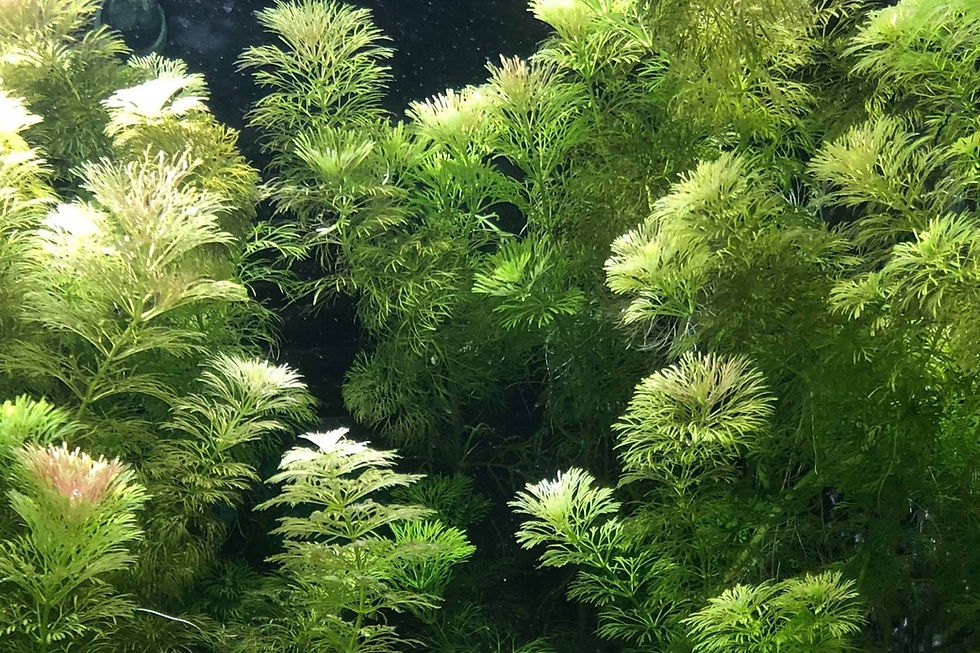
I have always championed the use of live plants in aquariums, not just for their role in water quality, but also for what they offer to the fish in terms of enrichment and environmental complexity. Cover, grazing surfaces, visual barriers, and behavioural enrichment all matter, and in most systems, plants deliver those things better than anything else we can add to glass boxes.
People were quick to point out that my blackwater tank has no plants, which is in stark contrast to the husbandry practices that I've been preaching for all these years. That was not an oversight, and it wasn't a limitation I had no say in. It was a decision shaped by the environment. At pH 3.5, with deep organic load, minimal mineral availability, and subdued lighting, this is an incredibly hostile place for plants to live. Instead of plants, structure comes from leaf litter, wood, roots, and shadow. Complexity is provided by layers of organic material rather than stems and leaves. The enrichment remains, but it is delivered in a different language, one that the fish recognise instinctively.

System Parameters
pH: 3.5
GH: 2 dGH
KH: 0 dGH
Temperature: 27 °C
Why these numbers?
These targets reflect the chemical and physical conditions documented in Southeast Asian peat swamp forests and associated blackwater drainages, the primary natural habitat of Sphaerichthys osphromenoides. These environments are defined not simply by “soft water”, but by a distinctive combination of extreme acidity, very low mineral availability, high dissolved organic content, and year-round thermal stability.
Field measurements from Malaysian and Indonesian peat swamp systems repeatedly record pH values between 3.0 and 5.0, with some forest pools and stagnant margins falling below pH 4 for extended periods.
General hardness in these systems is extremely low. Calcium and magnesium concentrations are minimal, but not zero, supplied indirectly through slow biological turnover and groundwater inputs. In aquarium conditions, a GH of roughly 2 to 4 dGH recreates this balance. It provides sufficient divalent ions for osmoregulation, muscle and nerve function, and long-term health, without pushing the fish into a mineral regime that is chemically foreign to them. True zero-mineral water is not representative of their habitat and can result in chronic physiological stress.
Carbonate hardness in peat swamp waters is effectively absent. Geological isolation from limestone and the dominance of organic acids result in near-zero alkalinity, meaning there is little to no carbonate or bicarbonate buffering present. In aquarium terms, a KH of approximately 0 dKH is not a risk factor but a defining feature of the system.
Temperatures across peat swamp lowlands are consistently warm, typically 26 to 30 °C, with little seasonal variation due to dense forest cover and shallow, slow-moving water. A maintained range of 26 to 28 °C reflects the core of this thermal envelope, supporting stable metabolism and immune function while avoiding the oxygen limitation and accelerated microbial growth that can accompany sustained higher temperatures in closed systems.
A Story That Does Not Need Inventing
I started keeping aquariums as places of imagination. Glass boxes where stories unfolded in my mind. Over time, they became something else, and in this aquarium, imagination is no longer required.
The fish emerge slowly from the leaf litter and root tangles. Curious, but never reckless. Each movement is measured, each exploration cautious. Watching them here feels like seeing an old story come to life, one written in shadows, stillness, and shelter.
There is no sense of performance. No urgency. No negotiation with the environment.
That, for me, is the joy of blackwater aquariums. They are not just displays. They are living windows into an ancient and largely unknown underwater world.


Thanks a lot for all this knowledge ! I never saw water as it was and understand so much more now.
This is a fascinating examination of how blackwater biotopes function.